After skin cancer is removed with Mohs surgery or traditional excision, reconstruction is often needed to repair the wound and achieve the best functional and cosmetic result.
The choice of reconstructive technique depends on several factors, including wound location, blood supply, prior scarring, history of radiation, smoking status, physical activity, and the patient’s ability to care for the wound.
Selecting the optimal approach requires close collaboration between the surgeon and the patient. Dr. Berlin takes the time to discuss all available options, including the advantages and limitations of each technique, to ensure the best possible outcome.
Secondary Intention Healing
Secondary intention healing, also known as granulation, allows the wound to heal naturally without full closure, either without stitches or with only partial closure.
Over several weeks, the wound fills in with new vascular tissue (granulation tissue), followed by gradual skin growth from the edges inward.
Although healing may take longer than surgical repair, this method often allows fewer activity restrictions. It is particularly useful for certain areas such as concave surfaces of the face, superficial wounds, and regions under tension.
Careful wound care is essential to optimize healing and achieve the best cosmetic result.
Linear Closure
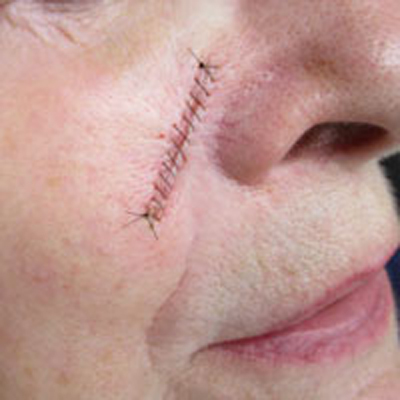
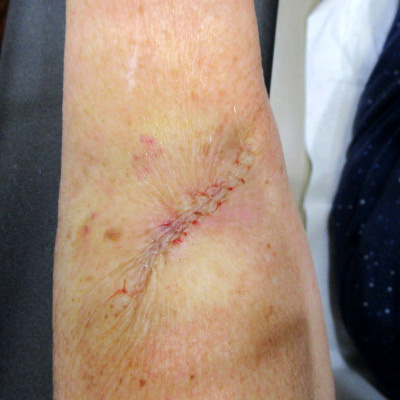
Linear closure is one of the most common reconstruction methods and involves closing the wound in a straight or slightly curved line using sutures.
Typically, two layers of sutures are used:
- deeper sutures provide long-term support and dissolve over time
- surface sutures bring the skin edges together and are removed later
Closures are often designed along natural skin lines or wrinkles to minimize tension and help the final scar blend in more naturally.
Skin Grafts
A skin graft involves taking tissue from a separate area of the body (the donor site) and placing it into the surgical wound (the recipient site).
Full-thickness skin grafts, which include both the epidermis and dermis, are most commonly used in skin cancer surgery. In some cases, split-thickness grafts or cartilage grafts may also be used.
Successful grafting depends on good blood supply at the recipient site and proper immobilization during healing. Careful selection of the donor site helps ensure the best match in color, texture, and thickness.
Skin Flaps (Tissue Rearrangement)
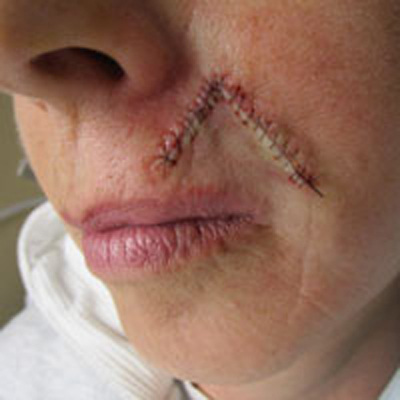
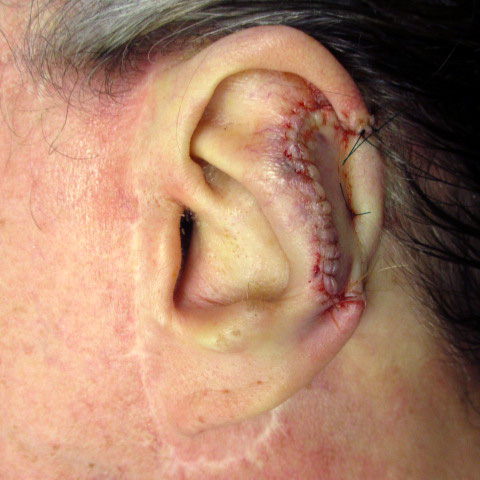
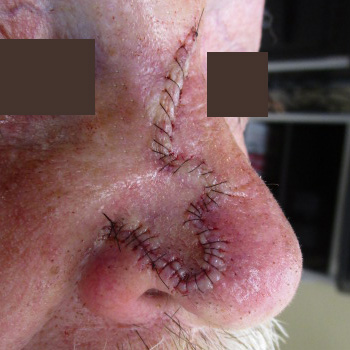
Skin flaps involve moving adjacent tissue into the wound while maintaining its original blood supply.
Because the tissue remains connected to its blood source, flaps are durable and often provide a better match in color and texture compared to grafts.
This technique requires additional incisions to allow proper movement of tissue, but these are strategically placed to minimize visibility and typically improve in appearance over time.
Experience Matters in Surgical Reconstruction
Reconstruction after Mohs surgery or traditional excision often requires advanced surgical techniques to achieve optimal functional and cosmetic outcomes.
In addition to his specialized training in Mohs surgery and reconstruction, Dr. Berlin has over 18 years of experience and has performed thousands of reconstructive procedures.
His approach combines technical expertise with individualized care to ensure the best possible results for each patient.
Frequently Asked Questions
Will I need reconstruction after skin cancer removal?
Not all wounds require reconstruction, but many benefit from repair to improve healing, function, and cosmetic appearance.
What type of reconstruction will I need?
The best method depends on the size, depth, and location of the wound, as well as individual patient factors. Your surgeon will discuss the most appropriate options with you.
Do skin grafts or flaps leave scars?
All procedures result in some scarring, but techniques are designed to minimize visibility and optimize cosmetic outcomes over time.
How long does healing take?
Healing time varies depending on the reconstruction method, but most wounds improve significantly within a few weeks, with continued refinement over time.
If you have questions about wound repair, healing, or what to expect after surgery, our office is here to help guide you.