
Skin cancer occurs when skin cells grow in an abnormal, uncontrolled way. The most common types are basal cell carcinoma and squamous cell carcinoma, which are usually highly treatable when detected early. Melanoma is less common but can be more serious.
Overview of Skin Cancer
The primary cause of skin cancer is ultraviolet (UV) exposure from the sun or tanning beds. Other risk factors include a weakened immune system, prior radiation exposure, chronic wounds, and certain environmental exposures. Some individuals may also have a genetic predisposition.
Common warning signs include a sore that does not heal, a new or changing growth, a spot that bleeds easily, or a lesion that changes in size, shape, or color. Any persistent or changing lesion should be evaluated.
Basal Cell Carcinoma
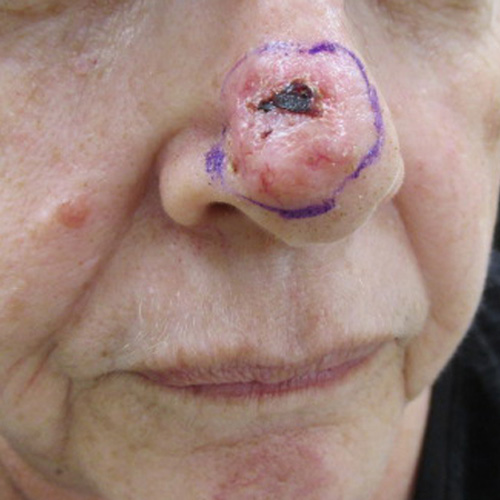
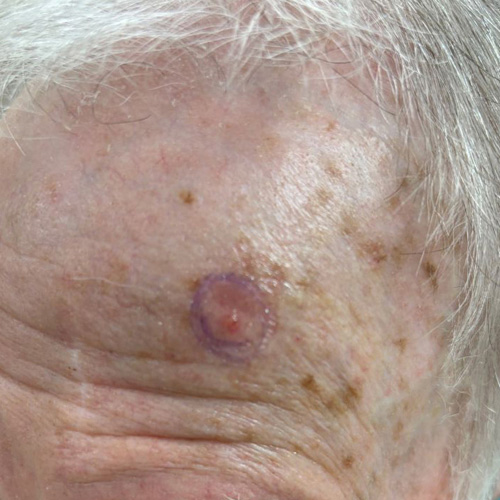
Basal cell carcinoma is the most common type of skin cancer, accounting for approximately 75–80% of cases. It typically develops on sun-exposed areas such as the face, ears, scalp, and neck.
It may appear as a pearly or shiny bump, a non-healing sore, or a lesion that bleeds easily. Although it rarely spreads to other parts of the body, it can grow locally and cause significant tissue damage if left untreated.
Squamous Cell Carcinoma
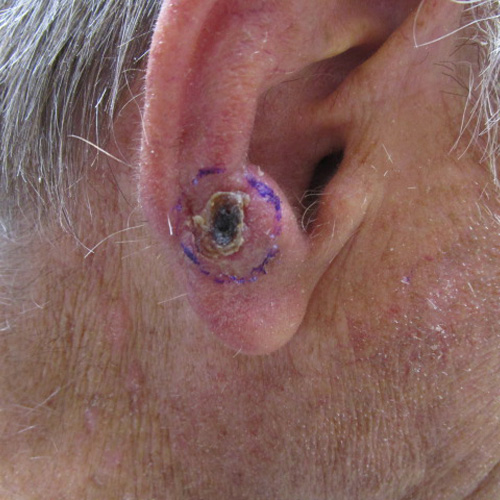
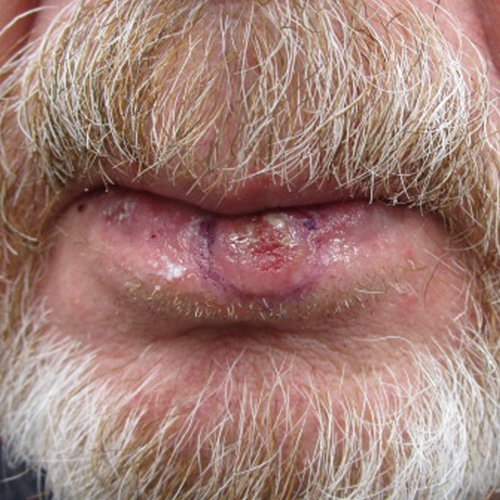
Squamous cell carcinoma is the second most common type of skin cancer. It often occurs on sun-exposed areas but may also develop on the lips or other regions.
It may present as a rough, scaly patch, a thickened lesion, or a non-healing sore. Squamous cell carcinoma has a higher risk of spreading compared to basal cell carcinoma, particularly in high-risk patients.
Malignant Melanoma
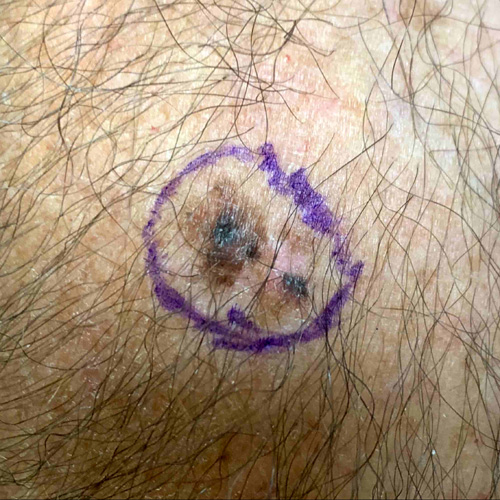
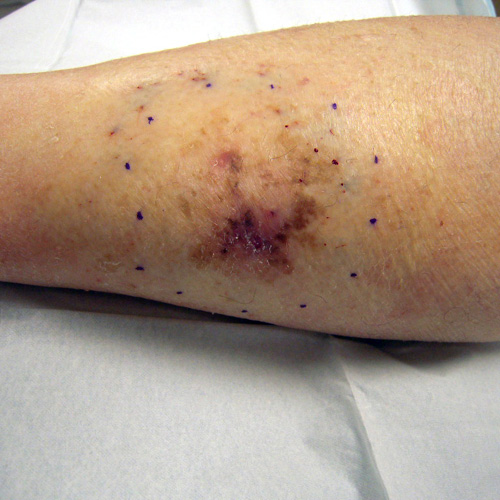
Melanoma is less common than basal cell or squamous cell carcinoma but is more aggressive. It has a higher risk of spreading if not detected early.
Melanoma may arise within an existing mole or appear as a new lesion. Warning signs are often summarized by the “ABCDE” criteria: asymmetry, irregular borders, color variation, diameter, and evolving appearance.
Early detection is critical, as melanoma is highly treatable in its early stages.
Treatment of Skin Cancers
Skin cancer is typically diagnosed with a skin examination and, when necessary, a biopsy to confirm the diagnosis.
Treatment depends on the type, size, and location of the cancer. Options may include surgical excision, electrodesiccation and curettage, or topical therapies in select cases. Mohs micrographic surgery is often recommended for skin cancers in cosmetically sensitive areas or those requiring the highest cure rate while preserving healthy tissue.
Dr. Berlin is board-certified in Dermatology and Micrographic Dermatologic Surgery and is fellowship-trained in Mohs surgery. Treatment recommendations are individualized based on each patient’s condition.
If you have a concerning lesion or have been diagnosed with skin cancer, we are happy to help guide you through your options.
Frequently Asked Questions
What are the most common types of skin cancer?
The most common types of skin cancer are basal cell carcinoma and squamous cell carcinoma. Malignant melanoma is less common but can be more serious because of its greater risk of spreading.
What are the warning signs of skin cancer?
Warning signs may include a sore that does not heal, a new or changing growth, a spot that bleeds easily, or a lesion that changes in size, shape, or color. Any persistent or changing lesion should be evaluated.
Is skin cancer treatable?
Yes. Most skin cancers are highly treatable when detected early. Early diagnosis is especially important for melanoma, which can be more dangerous if allowed to progress.
How is skin cancer diagnosed?
Skin cancer is typically diagnosed with a skin examination and, when necessary, a biopsy to confirm the diagnosis.
What treatments are available for skin cancer?
Treatment depends on the type, size, and location of the cancer. Options may include surgical excision, electrodesiccation and curettage, topical therapy in select cases, and Mohs micrographic surgery for certain skin cancers in cosmetically sensitive or high-risk areas.
If you have a concerning lesion or have been diagnosed with skin cancer, schedule an evaluation with Dr. Berlin to discuss diagnosis and treatment options.