The incidence of skin cancer continues to rise every year. In fact, skin cancer is the most common malignancy in both men and women. Basal cell carcinoma, squamous cell carcinoma, and malignant melanoma are the most frequently encountered types of skin cancer and are most often caused by excessive sun exposure.
Initially small, skin cancers such as basal cell carcinoma and squamous cell carcinoma continue to grow, invading and eventually destroying both surrounding and underlying tissue. Extension beyond the visible tumor margins is common, and these “roots” must be completely removed to prevent recurrence.
About Mohs Micrographic Surgery
Mohs surgery, named after Dr. Frederic Mohs who developed the procedure, is the most precise and effective treatment available today for many types of skin cancer, and is most commonly used for basal cell carcinoma and squamous cell carcinoma.
During Mohs surgery, the surgeon removes cancerous tissue one layer at a time and examines each layer under a microscope. This process allows complete removal of cancer cells while preserving as much healthy tissue as possible.
This results in the highest cure rates—up to 99%—and the smallest surgical wound, helping minimize scarring. This precision is especially important for cancers on the face and other cosmetically sensitive areas.
Step-by-Step Mohs Surgery Procedure
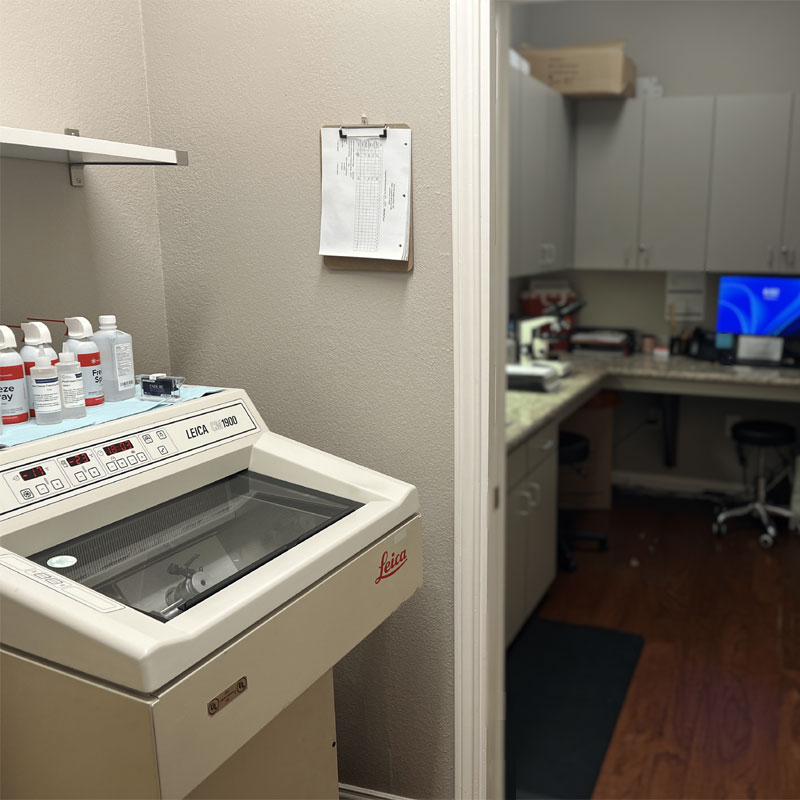

Mohs surgery is performed in stages, allowing precise removal of cancer while preserving healthy tissue.
Step 1: The surgeon removes all visible cancer along with a small margin of surrounding tissue. The specimen is carefully oriented for accurate mapping.
Step 2: The tissue is processed, sectioned, inked, and mapped to correspond to its exact location on the skin.
Step 3: The specimen is frozen and slides are prepared to examine the entire surgical margin.
Step 4: The surgeon examines the tissue under a microscope to identify any remaining cancer cells. If tumor extensions are found, their exact location is mapped.
Step 5: Additional tissue is removed only from the areas where cancer remains. This process is repeated until all margins are clear.
After the Cancer Is Removed
Once all cancer has been removed, the wound is repaired using the most appropriate technique. This may include simple closure, a skin flap, or a skin graft, depending on the size and location of the defect.
Proper post-operative wound care is essential for healing and achieving the best possible cosmetic outcome.
When Is Mohs Surgery Recommended?
Mohs surgery is commonly recommended for skin cancers located in cosmetically or functionally sensitive areas such as the face, ears, nose, lips, hands, and feet.
It is also used for:
- recurrent tumors
- large tumors
- tumors with poorly defined borders
- aggressive or rapidly growing skin cancers
Why Choose a Fellowship-Trained Mohs Surgeon?
Mohs surgery requires specialized expertise in dermatologic surgery, microscopic pathology, and reconstructive techniques. Fellowship training provides intensive hands-on experience in these areas beyond dermatology residency.
The American College of Mohs Surgery (ACMS) sets rigorous standards for fellowship training, ensuring a high level of proficiency and patient care.
Board certification in Micrographic Dermatologic Surgery, recognized by the American Board of Dermatology, reflects advanced training and expertise. Dr. Berlin is among the first Mohs surgeons to achieve this certification, highlighting his extensive experience and commitment to excellence.
Frequently Asked Questions
What is Mohs surgery?
Mohs surgery is a specialized procedure that removes skin cancer layer by layer while examining each layer under a microscope to ensure complete removal.
How long does Mohs surgery take?
The procedure is performed in stages and can take several hours, depending on how many layers need to be removed.
Is Mohs surgery painful?
The procedure is performed under local anesthesia, so patients are comfortable during surgery. Mild discomfort afterward is typically manageable.
What is the cure rate of Mohs surgery?
Mohs surgery has the highest cure rate of any skin cancer treatment, up to 99% for many tumors.
If you have questions about your diagnosis, treatment options, or what to expect, our office is happy to help.